How long does house restumping take? The sources do not say
We found no source that says how long house restumping takes, whether you can stay in the house while it is done, or which season is best. We would rather say so than print a number we cannot check. What a source can give is the order of the steps, and the builder can give the programme. Ask for it in writing, with dates, before you agree to anything.
The steps of a house restump, in order
The steps below are assembled from the Building and Plumbing Commission's surveyor page, a building inspector's guide and a repair vendor's guide. Not every job has every step, and the order can change.
- A subfloor inspection. Someone looks at the stumps, bearers and joists and writes down what they find.
- A surveyor is appointed. Only the owner or the owner's agent may appoint a private building surveyor, and a builder cannot appoint one for domestic building work under a domestic building contract (Building and Plumbing Commission surveyor page). A permit is sought if the surveyor says one is needed.
- A written contract. Where the contract is over the insurance threshold, the builder gives you the policy and certificate of insurance before you pay a deposit (Consumer Affairs Victoria). Contract and deposit rules change by 1 December 2026, so check them at the time you sign.
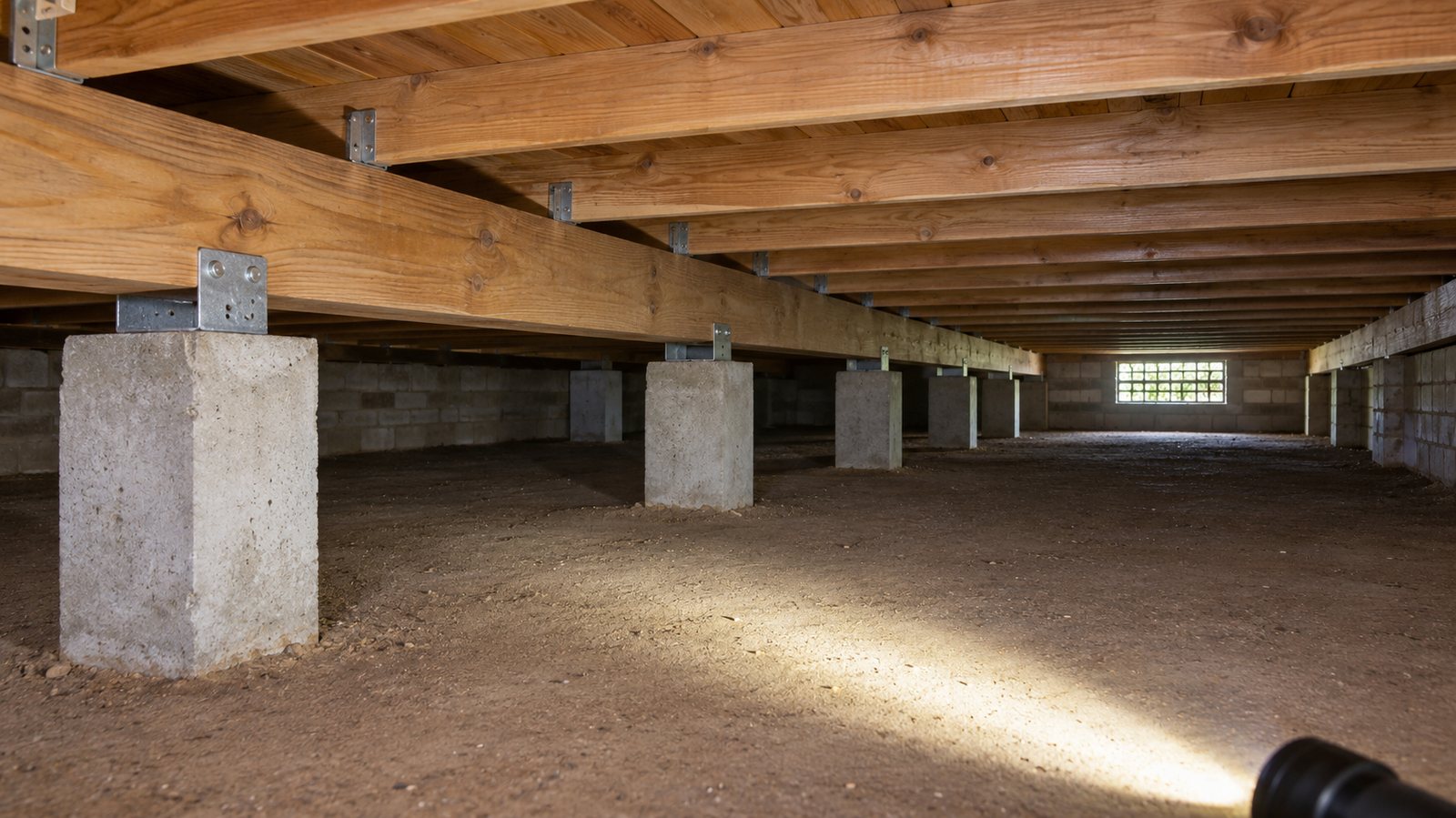
- The house is lifted. A vendor's guide says hydraulic jacks or similar lift and adjust the structure, and the building may be lifted temporarily.
- Old stumps come out and new stumps go in. One vendor's guide says the old stumps are replaced, usually with concrete or steel.
- Bearers and joists are repaired or replaced. That is found once the subfloor is open. A building inspector's guide says damaged or decayed stumps and sub-floor elements are completely replaced when a house is jacked.
- The floor is relevelled.
- Drainage, ventilation and termite checks under the house. The soils and subfloor guide covers the figures.
- Final inspection and certificates. A registered building surveyor, private or municipal, issues permits, occupancy permits and certificates of final inspection.
What jacking can do inside the house
Lifting a house can disturb what is attached to it. One building inspector's guide says jacking can damage doorframes, plaster, tiles and ducted heating. Whether that happens to your house, and who repairs it, is not something a source can tell you. Ask the builder who repairs what, and whether it is in the quote. The cost guide lists it among the items that move a price.
The same applies to bearers and joists, which are found sound or not once the floor is open. A part job can grow for the same reason, and the partial restumping page explains how to ask for the price of extra work before it is needed.
Rainfall by station, and what it does not tell you
Owners often ask about rain, so here are the Bureau of Meteorology station means. They describe the district, not the job, and no source we read links rainfall to house restumping. Station records vary: the Sale station closed in 1945 and its figures are history, not current weather.
| Station | Rainfall records | Wettest month (mean) | Driest month (mean) |
|---|---|---|---|
| Bairnsdale Airport (Bureau of Meteorology) | 1942 to 2026 | November, 80.6 mm | August, 36.9 mm |
| Wonthaggi (Bureau of Meteorology) | 1911 to 2026 | August, 102.4 mm | February, 45.3 mm |
| Sale, closed station (Bureau of Meteorology) | 1870 to 1945 | October, 63.0 mm | July, 41.5 mm |
The stations differ in how wet their wettest and driest months are, but that is all the table says. Ask the builder how a wet spell would change the programme, and who decides when ground is too wet to work. We found no source that answers either question.
What to put in the written programme
A written programme is the builder's commitment, and it is what you can compare between quotes. Ask for it to list:
- the start date, the number of working days and what happens if weather stops work
- access to the subfloor, and whether the house can be lived in while it is lifted
- who disconnects and reconnects water, gas, electricity and the phone line, and when
- when the surveyor is booked for inspections and the final inspection
- what repairs are included, and how extra work is priced and agreed in writing
- drainage and ventilation: the National Construction Code sets cross-ventilation and clearance figures for new subfloors (NCC 2022 Housing Provisions Part 6.2), and the surveyor decides what applies to your job
A house that is not lived in needs the same list with one addition: who holds the keys and how you are sent photos and updates. The quote checklist carries the rest, and the permit page explains who does what with the paperwork, checked 6 November 2026. To start, send the details of your house, and the enquiry goes to a local builder.
What this guide cannot do
This guide cannot tell you how long your house restumping job will take, whether you can stay in the house or when to book it. No source we read says, and the answer depends on the house, the access and the builder. We cannot promise that any weather or rainfall pattern helps or hinders the work. We are a referral service: we pass your enquiry to a local builder, who inspects, quotes and gives the programme, and who holds any registration or insurance that applies. A registered building surveyor decides what inspections the job needs.
Check the current rules before you rely on this
This page describes the order of the steps in a house restumping job, the rainfall by station and what to put in a written programme. It describes the rules in general terms as they stood in November 2026, checked 6 November 2026. Standards, forms, thresholds and fees change.
The authoritative sources are BPC, appointing a building surveyor, CAV, insurance and insolvency for home building, Bureau of Meteorology, Bairnsdale Airport climate statistics (station 085279) and Wellington Shire Council, building permits (lists 'Reblocking or restumping of an existing building: Permit Required.'). Where anything here differs from those sources, they are right and we are not.
We are not builders, building surveyors, regulators or lawyers. For what applies to your job, ask the builder which registration they hold and check it on the Building and Plumbing Commission register, then ask a registered building surveyor and your council what is needed. Contract, deposit and payment rules change by 1 December 2026.
Accurate at the time of writing, November 2026. Always check the source before relying on it.