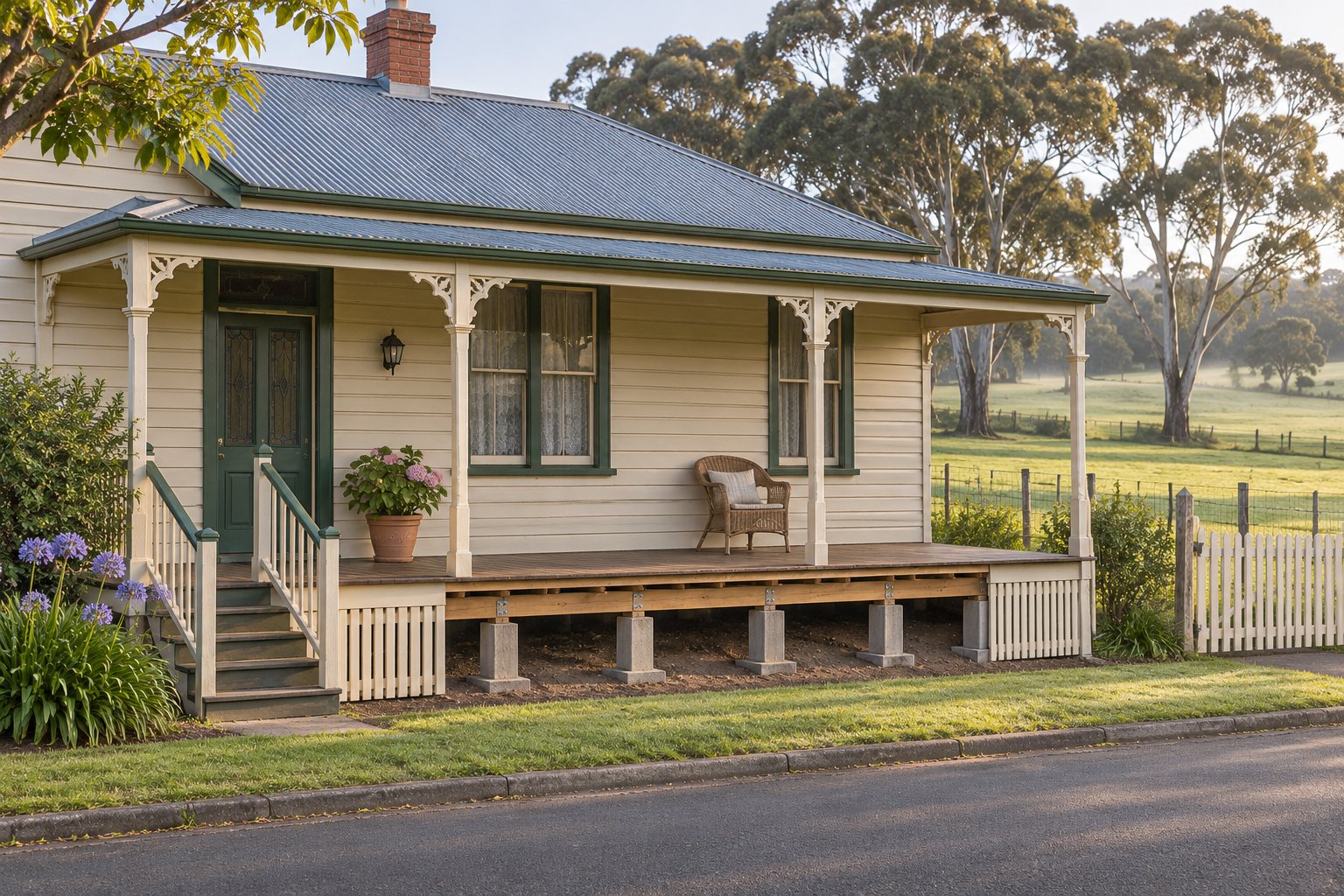
House restumping and reblocking across Gippsland
House restumping and reblocking across Gippsland, passed to local builders who work in your town.
A sloping floor or a sticking door can have more than one cause. Get a builder to look under the house, ask which registration they hold, and get the quote in writing.
Tell us the town and what the house is doing
The town, the type of house, whether it is lived in or a holiday house, and what you have noticed. A photo of the floor, a crack or the subfloor is enough to begin. Your enquiry is passed to a builder who works in your town. This site does not do the work, quote, inspect or issue permits.
Request a quote
House restumping in Gippsland: floodplain, hills, lakes and coast
House restumping in Gippsland means replacing the stumps that hold up the floor of a house, and reblocking is the trade word for the same job. Gippsland here is four shires. At the 2021 Census Wellington Shire counted 45,639 people and 23,503 private dwellings (Census figures for Wellington), East Gippsland 48,715 and 25,948 (East Gippsland), South Gippsland 30,577 and 17,114 (South Gippsland), and Bass Coast 40,789 and 28,938 (Bass Coast).
The ground changes across those shires: river flats at Sale and Maffra, the Mitchell River country around Bairnsdale, lake shores at Paynesville and Lakes Entrance, hill country around Leongatha, Korumburra and Mirboo North, and coast at Wonthaggi, Inverloch and Cowes. At Cowes, 2,939 of 5,920 private dwellings (51.7 per cent) were unoccupied on census night; this includes holiday houses, but the ABS page does not say how many (Cowes Census page).
Restumping and reblocking are used together in Victoria. The regulator's 2017 notice says "re-blocking, restumping", Wellington Shire's building permits page says "Reblocking or restumping", and the sources we read draw no technical difference between the words, so this site uses both. The reblocking page explains the whole-house job. Homes in the Latrobe Valley and in West Gippsland have their own regional pages elsewhere.
What to settle before you book
- House type and useA weatherboard, brick veneer, fibro or holiday house, and whether it is lived in, rented or empty.
- Which council areaWellington: Sale and Maffra. East Gippsland: Bairnsdale, Paynesville and Lakes Entrance. South Gippsland: Leongatha, Korumburra and Mirboo North. Bass Coast: Wonthaggi and Inverloch and Cowes and Phillip Island.
- What you have noticedFloors, doors, cracks and squeaks. See the signs guide.
- Stump materialTimber, concrete or galvanised steel. See the stumps guide.
- Surveyor and permitThe owner, or the owner's agent, appoints a private building surveyor, who says whether a permit applies. See building permits and surveyors.
- Registration and insurance noticeAsk which registration class the builder holds and check it on the register. See the registration page.
- A contract in writingConsumer Affairs Victoria says it is essential for all building work. Deposit rules change by 1 December 2026, on the same page.
- An itemised written quoteThe same lines from every builder. See the quote checklist.
House restumping, reblocking, relevelling and underpinning
House reblocking
The whole-house job, and what permit paperwork usually lists.
Read more →Partial restumping
Only some house stumps have failed, and how a variation is agreed.
Read more →House relevelling
Sloping floors and sticking doors, and when adjusting is enough.
Read more →House underpinning
For failing footings and cracked walls, not worn stumps.
Read more →What affects the cost
The factors behind a quote, with no invented prices.
Read more →How the job works
The steps from inspection to final certificate.
Read more →Four councils, four pages
Each cell comes from one page, as we found it, checked 6 November 2026. Only one of the four says anything about restumping.
| Council | What the page we found says about restumping | Who issues building permits on that page |
|---|---|---|
| Wellington | "Reblocking or restumping of an existing building: Permit Required." Underpinning is not mentioned (Wellington Shire building permits page). | "Building Permits are issued by private Building Surveyors." The Council says it does not issue them. |
| East Gippsland | Restumping, reblocking and underpinning are not mentioned (East Gippsland building permits page). | "We do not issue Building Permits, these are issued through Private Building Surveyors." The page says the owner is responsible for obtaining the permit. |
| South Gippsland | Restumping is not mentioned. The list says "you may use any appropriately registered practitioner of your choosing" (South Gippsland private surveyors list). | The page does not say who issues permits. |
| Bass Coast | Restumping is not mentioned (Business.gov.au page for Bass Coast). The council's own building page was not read. | You apply through "a registered building surveyor, either private or municipal". Whether Bass Coast has a municipal surveyor is not confirmed. |
Three of the four pages are silent on restumping, so we cannot say what those councils require. The permit page goes through each council in turn, and the flood and overlay page covers planning controls.
Permits and registration: what the pages say, and where they stop
A building permit in Victoria is issued by a registered building surveyor, private or municipal. The Building and Plumbing Commission (BPC) says only the owner, or the owner's agent, may appoint a private building surveyor, and that a builder cannot appoint one for domestic building work under a domestic building contract (BPC page on appointing a surveyor). Whether your job needs a permit is for the surveyor to say. All of this was checked 6 November 2026.
On registration, two statements sit side by side and we have not reconciled them. A Victorian Building Authority notice from 2017, from the regulator before the BPC, says any builder "engaged in the business of re-blocking, restumping or the demolition or removal of a home" "is still required to be registered, regardless of the cost of the work" (the 2017 notice). We did not find a BPC page that repeats it. The BPC says "Domestic building work worth more than $10,000 requires a registered builder" (BPC page on engaging a builder).
So ask the builder which registration class they hold, and check it on the BPC register. A written contract is needed above $10,000 (Consumer Affairs Victoria on major contracts), and the Home Warranty threshold is $20,000 from 1 July 2026. Deposit limits apply and change by 1 December 2026, so check the current limit before you pay anything.
What this site cannot do
This site cannot say whether restumping needs a permit in your town, whether the builder who contacts you holds a registration, or what the 1 December 2026 contract changes mean for your job. It makes no claim that any builder is registered, insured, endorsed or approved. A registered building surveyor decides on the permit, the BPC register shows a builder's registration, and Consumer Affairs Victoria publishes the contract rules.
Check the current rules before you rely on this
This page describes what the council, regulator and Commission pages we found say about building permits, builder registration and written contracts for house restumping in Gippsland. It describes the rules in general terms as they stood in November 2026, checked 6 November 2026. Standards, forms, thresholds and fees change.
The authoritative sources are Building and Plumbing Commission (BPC), engaging a builder, Victorian Building Authority notice, 2017: clarification of changes to registration requirements for domestic builders (predecessor of the BPC; dated), Wellington Shire Council, building permits (lists 'Reblocking or restumping of an existing building: Permit Required.'), BPC, appointing a building surveyor and CAV, preparing a major domestic building contract (major contract threshold). Where anything here differs from those sources, they are right and we are not.
We are not builders, building surveyors, regulators or lawyers. For what applies to your job, ask the builder which registration they hold and check it on the Building and Plumbing Commission register, then ask a registered building surveyor and your council what is needed. Contract, deposit and payment rules change by 1 December 2026.
Accurate at the time of writing, November 2026. Always check the source before relying on it.
What a restumping quote should itemise
This site publishes no prices. Ask each builder for the same lines, so two quotes for one house compare line by line.
| Line | What to ask |
|---|---|
| Stump type, size and spacing | What material, what size, and where each stump goes. |
| Hole depth and width | How deep and how wide. |
| Sole plate or footing | Whether one is used, and of what. |
| Ant capping | Whether it is included. |
| Connection to bearers | How each stump is fixed to the bearer. |
| Termite treatment method | What is proposed. |
| Bearers and joists | What happens if they need repair. |
| Plaster and doorframe repairs | Whether they are in the quote. |
| Who applies for the permit | The surveyor is appointed by the owner or the owner's agent. |
| Registration class held | Which class, to check on the BPC register. |
| Insurance notice of cover | Ask where the contract is over the Home Warranty threshold. |
| Written contract | Plain English and complete. Rules change by 1 December 2026. |
The full checklist of quote lines explains each line and the red flags, and the cost guide explains what moves a quote.
Towns across Gippsland
Five place pages cover the towns above, each with its own council, flood and ground facts. The form also takes other Gippsland towns such as Yarram, Foster and Orbost. The ground and climate guide compares rainfall by weather station, the about page explains this referral service, and the contact page has the form.
What Gippsland home owners ask about restumping
How do I know if my house needs restumping?
The signs that guides list are uneven or sagging floors, sticking or binding doors and windows, and cracks in walls, ceilings or around openings, with squeaky floors and cracked plaster also mentioned. Those signs can have other causes, and a subfloor inspection finds the cause. A web page cannot diagnose your house, so ask a builder to look under it and explain what they see.
How much does restumping cost in Gippsland?
This site publishes no price. The guides we read list the same cost factors: the number of stumps, the stump material, access to the subfloor, the ground, permit and surveyor fees, and repairs found once the subfloor is open. Published ranges disagreed by a factor of two or more and come from publishers who sell leads, so get itemised written quotes.
Do I need a building permit to restump a house in Gippsland?
Wellington Shire's building permits page says "Reblocking or restumping of an existing building: Permit Required." It also says the Council does not issue building permits and that private building surveyors do. East Gippsland says the same about surveyors. The South Gippsland and Bass Coast pages we found do not mention restumping, so ask a registered building surveyor. Checked 6 November 2026.
Does a restumping builder have to be registered?
A Victorian Building Authority notice from 2017 says a builder in the business of re-blocking or restumping is "still required to be registered, regardless of the cost of the work". The Building and Plumbing Commission page we found says work worth more than $10,000 requires a registered builder. We did not reconcile the two, so ask the builder which registration class they hold and check it on the BPC register.
How long does restumping take, and can I stay in the house?
No source we fetched gives how long a restump takes, whether you can stay in the house, or the best season. Ask the builder for the programme in writing. Ask about access to the subfloor, when water, power and gas are disconnected and reconnected, who repairs what after the house is lifted, and what happens if the weather turns.
What is the difference between restumping, reblocking, underpinning and relevelling?
Restumping replaces the stumps that hold up the floor, and reblocking is the trade word for the same job. Relevelling adjusts a floor that has moved while the existing supports stay. Underpinning strengthens failing footings, walls or slabs. These are descriptions from a vendor's guide, and a surveyor or engineer decides which one a house needs.
Should I choose timber, concrete or steel stumps?
One industry guide says treated timber is the lowest-cost option but the most vulnerable to rot and termites, concrete handles moisture and soil movement well, and galvanised steel is the dearest and often adjustable. We found no source that matches a material to a Gippsland town, so ask the builder why they propose a material and what the surveyor will accept.
Will restumping damage my walls or plaster?
One building inspector's guide says jacking a house can damage doorframes, plaster, tiles and ducted heating. We found no figures on how often. Ask the builder who repairs what, whether those repairs are in the written quote, and photograph the doors, walls and tiles before the work starts so any change is on record.
Send the town and what the house is doing
The town, the type of house, whether it is lived in, and a photo of the floor or the subfloor if you have one.